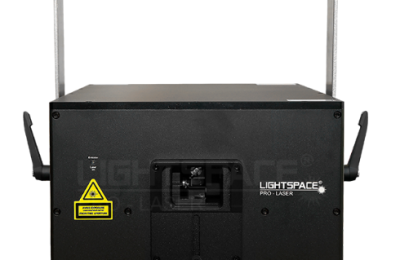
At concerts, the movements of laser projectors are often perfectly aligned with the beats and melodies of the music: when heavy bass drops, light beams burst dramatically; when melodies soften, beams flow gently. This “light and shadow concerto” is not manually operated, but relies on advanced Timecode Synchronization and audio analysis software.
Pre-Programmed Mode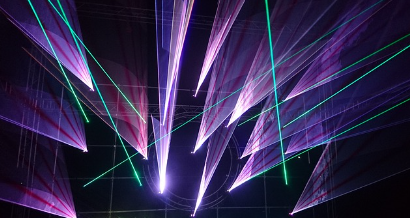
For elaborate tours, lighting directors program the show weeks in advance. Using professional laser control software (such as Pangolin Beyond or Showeditor), they import audio tracks and mark laser actions frame by frame on the timeline. Every scan and color change corresponds precisely to the waveform of the music. During performance, the console reads SMPTE timecode and commands the laser system to execute pre-set programs with millisecond precision, ensuring consistent effects across thousands of shows.
Real-Time Audio Response Mode
During improvisational segments or music festivals, laser operators use audio analysis tools. The software captures real-time audio signals from the on-site mixing console, analyzing frequency (low, mid, high) and amplitude.Programmers set predefined rules: for example, “trigger red strobes when low-frequency amplitude exceeds the threshold” and “accelerate beam speed when high frequencies appear.” In this way, lasers act like musical instruments, responding instantly to every live performance and delivering a unique visual impact.
Whether in precise reproduction or improvisation, laser projector systems are no longer simple lighting tools. They have become an invisible “visual musician” in the band, interpreting the soul of music through the language of light.